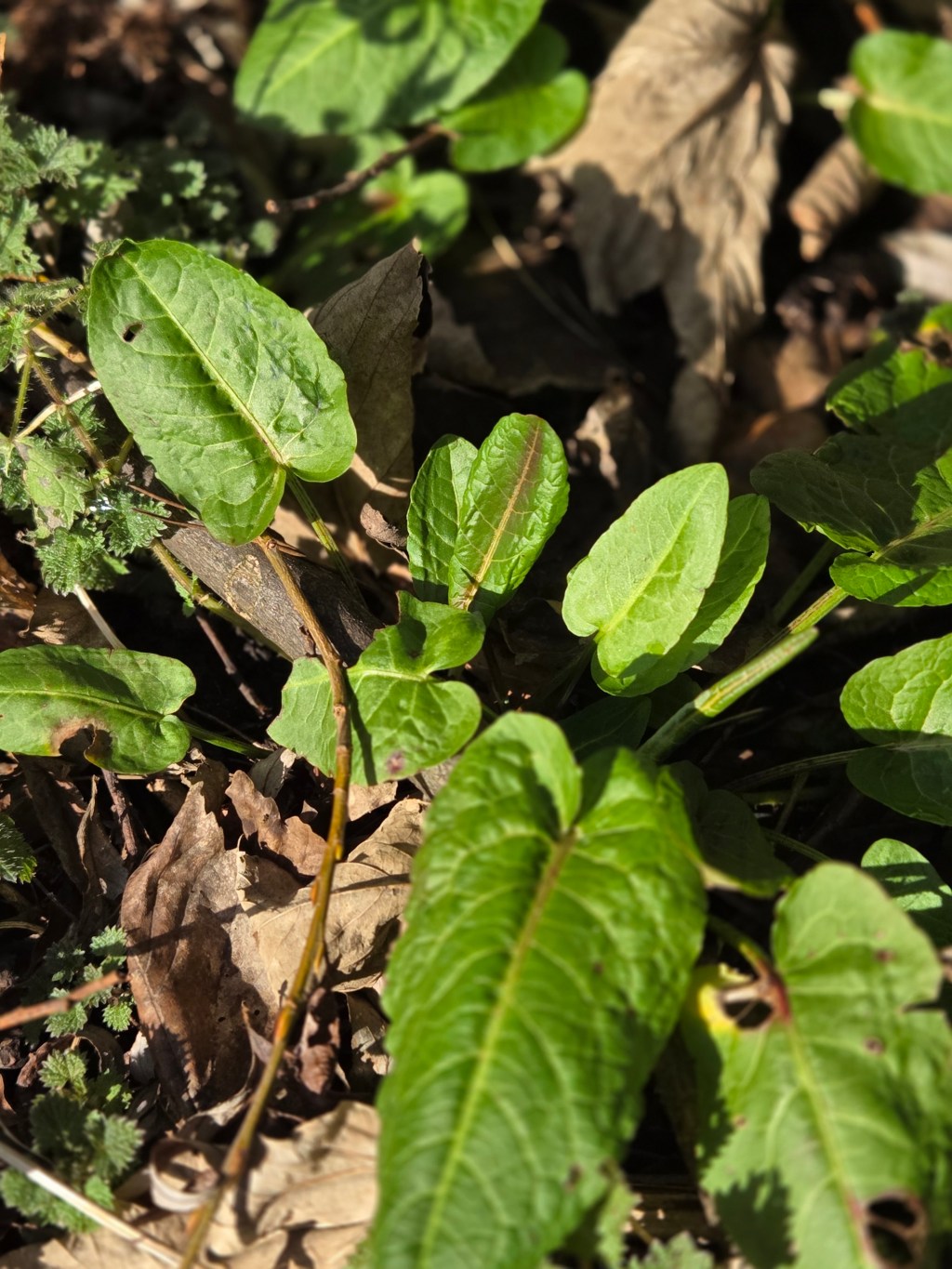
We are told to take only that which is given, and when I was here last the leeks had nothing to give. Bulbs hold energy saved up for the next generation like money in the bank. Last fall the bulbs were sleek and fat, in the first days of spring, that savings account gets depleted as the roots send their stored energy into the emerging leaves to fuel their journey from soil to sunshine. In their fist few days, the leaves are consumers, taking from the root, shriveling it up and giving nothing back. But as they unfurl they become a powerful solar array that will recharge the energy of the roots, playing out the reciprocity between consuming and producing in a few short weeks.
The leeks today are twice the size they were on my first visit and the scent of onions is strong where a deer has bruised the leaves. I pass by the first clump and kneel by the second.
Once again, I quietly ask permission. Asking permission shows respect for the personhood of the plant, but it is also an assessment of the well-being of the population. Thus I must use both sides of my brain to listen to the answer. The analytic left reads the empirical signs to judge whether the population is large and healthy enough to sustain a harvest, whether it has enough to share. The intuitive right hemisphere is reading something else, a sense of generosity, an open-handed radiance that says take me, or sometimes a tight-lipped recalcitrance that makes me put my trowel away.
Excerpt taken from Braiding Sweetgrass, The Honorable Harvest, by Robin Wall Kimmerer.
 mobiusjo
Leave a comment